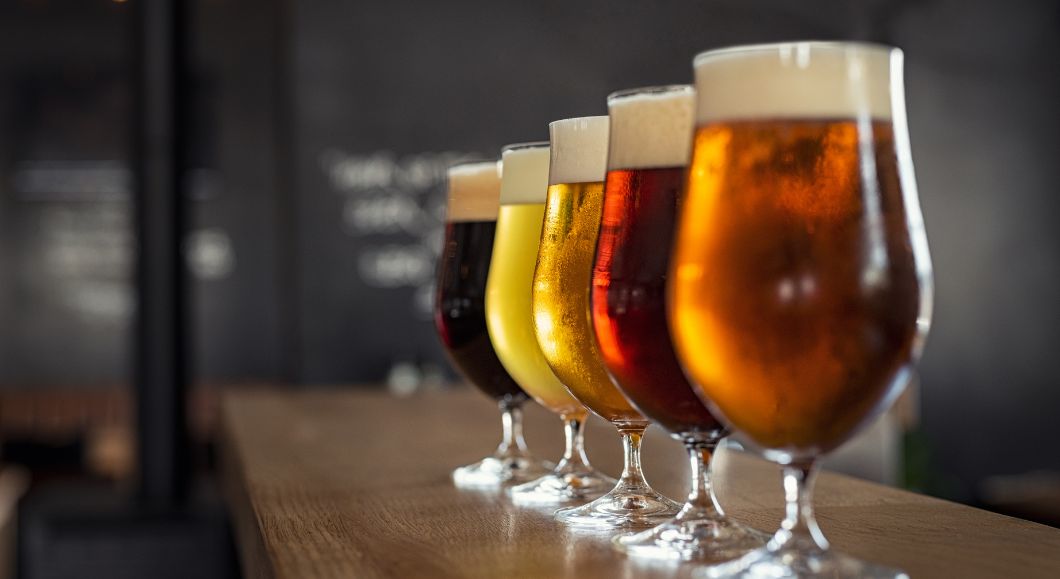
There is a persistent international assumption that Poland is primarily a vodka country. Poles themselves would correct you. Beer has been brewed here for over a thousand years, consumed by every class and generation, and in contemporary Poland it dramatically outsells vodka by volume. The word for beer — piwo — derives from a pre-Slavic root meaning simply “a drink,” which gives some indication of how fundamental it was to daily life long before the spirits industry developed.
Poland is the second largest beer producer in the European Union after Germany, producing around 39 million hectolitres annually. It has a long tradition of pale lager, two genuinely distinctive indigenous beer styles — Baltic Porter and Grodziskie — and since around 2011, one of the most energetic craft beer scenes in Central Europe.
A Brief History
The first recorded Polish brewery is documented in 1321, when the Duke of Oleśnica granted the city of Namysłów the privilege to brew beer. Browar Namysłów, Poland’s oldest continuously operating brewery, still produces on that site today. In the medieval period beer was brewed by monasteries, town guilds, and the nobility; Tyskie brewery dates its origins to 1629, making it one of the oldest in Europe.
The 20th century brought disruption on multiple fronts. Nazi occupation during World War II saw Polish breweries confiscated and repurposed to produce low-gravity session lagers for German troops on the Eastern Front. Postwar communist nationalisation consolidated production under state control, with individual breweries forbidden from selling outside their designated regions — with exceptions made only for Żywiec and Okocim, which were permitted to export. The result was a beer culture shaped by restriction: standardised, regional, and largely cut off from international influence.
After 1989, privatisation brought a wave of international acquisition. Four large brewers — Heineken, Carlsberg, SABMiller, and Carlsberg’s Okocim — absorbed the most prominent Polish brands and introduced mass-market marketing tactics that prioritised volume over character. By the early 2000s, the mainstream Polish beer market had largely homogenised into the kind of pale, adjunct-lager that could have been brewed anywhere.
The craft revolution came later than in some Western markets but arrived with considerable force. Pinta brewery released Poland’s first genuine craft beer — Atak Chmielu (Hop Attack), an IPA — in 2011, and the market has not stopped developing since. By 2025, hundreds of craft breweries operate across the country, and cities like Wroclaw, Warsaw, Krakow, and Gdansk have established reputations as serious destinations for beer tourism.
The Mainstream Brands
The large commercial brands dominate supermarkets, most restaurants, and sports venues. They share a characteristic: pale golden lager at 5–6% ABV, mild bitterness, clean finish, inoffensive in both the positive and neutral senses of the word. If you are at a Polish barbecue or a football match, you will be drinking one of these. They are cheap, cold, and exactly what they are supposed to be.
Żywiec is the most exported and internationally recognised Polish beer, founded by the Habsburg Archduke Friedrich in 1856 in the mountain town of Żywiec in the southern Beskid range. The label — Polish folk dancers in traditional costume — has been unchanged for decades and is instantly recognisable in export markets worldwide. The core lager (5.6% ABV) is cleaner and more characterful than most of its domestic competitors; the Żywiec Porter (9.5% ABV) is one of the better Baltic porters available in any supermarket.
Tyskie Gronie is the best-selling Polish beer brand domestically. Brewed in Tychy in Silesia since 1629, it is a textbook Central European lager: golden, moderately hoppy, with a clean malt backbone. The name comes from the Gronie hills above the Tychy valley.
Lech is produced in Poznań and is particularly associated with Greater Poland. Clean, slightly sweet, reliable.
Żubr (the Bison) is named after the European bison of the Białowieża forest. Originally the Dojlidy brewery’s product, rebranded in 2003, it is one of the most widely distributed Polish lagers and notable for a slightly higher ABV (typically 6%) than its main competitors.
Okocim is one of the oldest continuously operating Polish breweries, founded in 1845 in the village of Okocim in Lesser Poland. The core lager is unremarkable by 21st-century standards, but Okocim’s historical position in Polish brewing is significant, and its Baron premium range and occasional specialty releases are worth attention.
Perła from Lublin has a strong regional following in eastern Poland. Not widely exported but one of the better mainstream lagers.
The Two Distinctively Polish Styles
Beyond the mainstream lager category, Poland has two beer styles that are genuinely its own — styles that craft breweries around the world now borrow and reference.
Baltic Porter is the more widely available of the two and one of the most distinctive beer styles in Europe. It emerged in the Baltic Sea trading region in the 18th century, when British porter was being exported to the Baltic states and local brewers began producing their own interpretations. The key difference from English porter and stout: Baltic Porter is fermented with lager yeast at cold temperatures, producing a very different flavour profile — smoother, less fruity, with notes of dark chocolate, dried fruit, molasses, and occasionally tobacco or leather. At 8–10% ABV, it is a strong, serious beer that needs time to drink properly.
Polish Baltic Porter is the best in the world by most assessments. The commercial examples from established breweries (Żywiec Porter at 9.5%, Okocim Porter, Perła Porter) are all decent, but the craft examples have pushed the style considerably further. Komes Porter Bałtycki from the Cornelius/ForestBeer group won bronze at the World Beer Cup and is considered one of the finest examples of the style anywhere. Kormoran Imperium Prunum — a Baltic Porter brewed with smoked plums, released in limited batches — is among the most celebrated beers Poland has produced in the craft era.
Grodziskie (also called Grätzer in German) is Poland’s lost beer style, revived. It was brewed for centuries in Grodzisk Wielkopolski in Greater Poland — a golden, low-gravity (2.5–3.5% ABV) wheat ale made from oak-smoked wheat malt, producing a beer that is simultaneously light, sparkling, and distinctly smoky. It was nicknamed the “Polish champagne” for its high carbonation. Industrial production ceased in the 1990s; the style nearly disappeared entirely. It has been revived by craft breweries in Poland and internationally, and is now regularly produced by several Polish craft brewers. A glass of properly made Grodziskie — clean, pale, intensely carbonated, with a whisper of wood smoke — is one of the most unusual beer experiences available in the country.
The Craft Beer Revolution
The Polish craft beer movement began seriously around 2011 and has been accelerating since. The drivers were familiar from other countries: a generation of homebrewers who wanted to drink better beer than the mainstream offered, a market where the large brands had left considerable space for character and variety, and the inspiration of American and UK craft brewing that was becoming increasingly visible on the internet.
Pinta is the brewery most credited with starting the movement. Their Atak Chmielu (Hop Attack) was Poland’s first commercial IPA and proved that Polish drinkers would pay for flavour.
AleBrowar opened in 2012 and quickly established itself with Rowing Jack IPA and the American Pale Ale King of Hop — beers that showed what the market could accept if given the choice.
Artezan in Warsaw produces Pacific, one of the most celebrated Polish pale ales, and Cymbopogon, a citrus-forward beer that has won considerable attention internationally.
Pracownia Piwa in Krakow — founded by three friends in 2013 — focuses on experimental styles including rye stouts, smoked beers, and witbiers, and produces Smoked Cracow, a smoked lager that pairs beautifully with traditional Polish smoked meats.
Browar Stu Mostów (100 Bridges Brewery) in Wroclaw is one of the largest and most internationally visible craft breweries in Poland, producing a wide range of styles with consistent quality.
Ursa Maior in Bieszczady brews using mountain spring water and produces craft beers including an excellent Golden Ale.
The craft market has concentrated particularly in Wroclaw, which has established itself as Poland’s craft beer capital — with more independent tap rooms, specialist beer bars, and brewery taprooms per capita than any other Polish city.
How Beer Is Drunk in Poland
The standard serving in a Polish bar is 500ml — a half-litre glass called simply “piwo” or “pół litra.” Smaller 330ml glasses exist, but the half-litre is the default. Bottles are commonly 500ml or 330ml.
Beer in Poland is served cold but not ice-cold — typically around 4–6°C for lagers. The preference is for the beer to be drinkable rather than numbingly cold.
In traditional Polish culture, beer plays a social rather than a contemplative role — it accompanies food, conversation, and outdoor activities more than it is analysed. The craft beer scene has brought a different culture: tap lists, flights, tasting notes, food pairing. Both cultures coexist comfortably.
A word about mixing: in southern Poland and during winter months, beer is sometimes mixed with fruit juice — raspberry syrup (piwo z malinami) is a traditional and genuinely pleasant combination that cuts the bitterness with sweetness and warmth. Do not dismiss this as eccentric until you have tried it on a cold evening.
Useful Polish at the Bar
Poproszę piwo — A beer, please
Piwo jasne — Pale lager (the default)
Piwo ciemne — Dark beer
Piwo pszeniczne — Wheat beer
Pół litra — Half litre
Na zdrowie! — Cheers!
Where to Drink
In every Polish city, the distinction between mainstream bars and craft beer bars is now reasonably clear. Mainstream bars (and most restaurants) offer two or three lager taps and bottles. Craft beer bars — concentrated in the city centres and in the more bohemian residential neighbourhoods — offer 10–30 taps covering a full range of styles, with regular Polish and imported craft options.
In Wroclaw: the Browar Stu Mostów taproom on Świdnicka, and numerous independent bars in the Nadodrze district. In Warsaw: the craft scene in Powiśle and on Świętego Antoniego Street. In Krakow: Kazimierz, where several bars maintain serious tap lists alongside the wine bars and cocktail bars. In Gdansk: the waterfront bars increasingly carry craft options alongside the mainstream.
The honest summary of Polish beer in 2025 is that the industrial tier remains large, competent, and uninspiring in roughly equal measure, while the craft tier has developed to the point where Poland now produces some of the finest Baltic Porters, IPAs, and specialty beers in Europe. Seek out a Baltic Porter and a glass of Grodziskie before you leave, and your understanding of what Polish brewing can do will be considerably expanded.