Krakow has one of the most underrated food scenes in Europe. While the world queues for pasta in Rome and croissants in Paris, relatively few travellers talk about the pierogi at a Kazimierz milk bar or the zapiekanka from a street vendor on Plac Nowy. That is their loss — and your gain.
This guide covers everything you need to eat in Krakow, from the dishes that have been on every table in the city for centuries to the street food that locals eat at midnight after a night out. No fluff, no tourist traps — just the food that actually matters.
Pierogi — the dish that defines Krakow
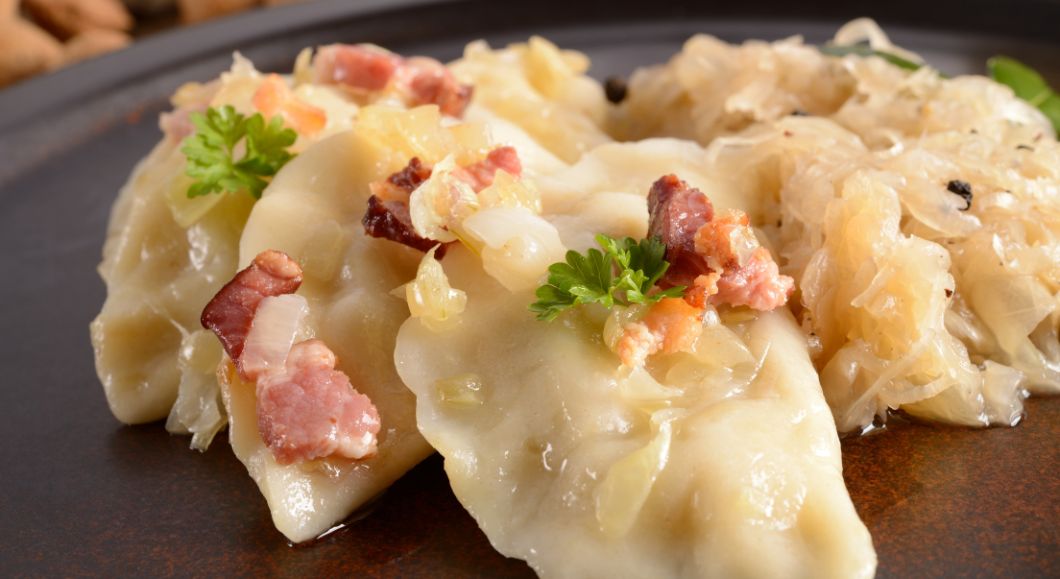
No food is more associated with Krakow than pierogi. These half-moon dumplings are stuffed, boiled or fried, and served with toppings that range from sour cream and caramelised onions to butter and breadcrumbs. They are the dish that brings Polish families to the table on Sundays and the first thing every returning expat asks for at the airport.
The classic filling is ruskie — mashed potato, white cheese (twaróg) and onion. It sounds simple. It is not simple. When made well, the balance of salty cheese and sweet onion inside thin pasta dough is one of those combinations that makes you understand why a country would build a culinary identity around a single dish.
Beyond ruskie, you will find pierogi stuffed with minced meat and sauerkraut, mushroom and sauerkraut (the traditional Christmas Eve version), spinach and feta (a more modern take), and sweet versions filled with blueberries or strawberries, served with cream and a dusting of sugar.
Where to eat them: Restauracja U Babci Maliny on Szlak Street — a basement restaurant covered in old photographs that feels like eating at a grandmother’s house in the 1970s. Book ahead. Alternatively, for the full experience, take a pierogi-making class in Kazimierz — you will spend two hours learning the craft, eat everything you make, and leave understanding why Polish home cooks take this dish so seriously.
Zapiekanka — Krakow’s greatest street food
If you walk through Plac Nowy in Kazimierz after dark, you will see a queue at a circular building in the middle of the square. That is the zapiekanka stand, and that queue is entirely justified.
Zapiekanka is an open-faced baguette toasted until the bottom is crisp, loaded with mushrooms and melted cheese, and finished with ketchup, garlic sauce or both. It was born in communist Poland as affordable fast food and has survived every economic and cultural change since because it is, simply, perfect for what it is.
The version at Plac Nowy costs around 10-15 PLN. It is bigger than your forearm. It is the correct late-night food for Krakow.
Modern Krakow has elevated zapiekanka considerably — you will now find versions with truffle oil, caramelised onions, pulled pork and artisan cheeses at places like Endzior on Plac Nowy. But the original version at the circular kiosk remains the benchmark.
Żurek — the soup that warms everything
Żurek is a sour rye soup with a flavour profile unlike anything in Western European cooking. It is made from fermented rye flour, which gives it a sharp, tangy base, then loaded with hard-boiled egg, white sausage (biała kiełbasa) and sometimes potatoes. The best versions are served in a hollowed-out bread bowl, which slowly absorbs the soup as you eat.
It is the kind of dish that sounds strange before you try it and becomes something you think about for years afterwards. Order it on your first morning in Krakow — it is the traditional Easter breakfast dish and one of the most distinctly Polish things you will eat anywhere in the country.
Where to eat it: Milkbar Tomasza on Tomasza Street — a modernised milk bar (bar mleczny) that serves traditional Polish dishes at old-school prices in a clean, well-lit setting. A bowl of żurek with bread costs around 18-22 PLN.
Barszcz — beetroot soup two ways
Barszcz is the other great Polish soup — a deep crimson beetroot broth with an earthy sweetness that is completely addictive. It comes in two main versions in Krakow: czerwony (red), which is the clear, intensely flavoured broth served with small mushroom dumplings called uszka, and biały (white), which is actually the same thing as żurek — a creamy, sour rye version. Red barszcz is the Christmas Eve dish, but you will find it year-round in traditional restaurants.
The colour alone is worth ordering it for. It arrives looking like something from a jewellery box.
Obwarzanek — the Krakow bagel
The obwarzanek krakowski is a protected regional product — you cannot call it an obwarzanek unless it was made in Krakow, in the same way that Champagne can only come from Champagne. It is a twisted bread ring, boiled before baking (giving it a chewy crust), and topped with poppy seeds, sesame or coarse salt.
Street vendors sell them from metal carts throughout the city centre for 2-3 PLN. They have been sold on the streets of Krakow since the 14th century. They are the original Krakow street food — everything else came later.
Eat one warm, straight from the cart, on your first walk through the Main Market Square. It is the correct introduction to the city.
Kotlet schabowy — the Polish schnitzel
Kotlet schabowy is a breaded and fried pork cutlet — Poland’s answer to Wiener schnitzel, though most Poles will firmly inform you that the comparison is offensive and their version is superior. It is served almost everywhere, usually with mashed or boiled potatoes and kapusta zasmażana — a braised, slightly sour sauerkraut that cuts through the richness of the meat.
It is hearty, unfussy, and deeply satisfying. Order it at a milk bar rather than a tourist restaurant — the version at a bar mleczny will cost half the price and taste twice as good.
Gołąbki — cabbage rolls
Gołąbki (pronounced roughly “go-WAHM-ki”) are minced pork and rice wrapped in blanched cabbage leaves and braised in tomato sauce until everything collapses into something soft, savoury and deeply comforting. They are classic Polish home cooking — the kind of dish that no restaurant ever quite replicates as well as someone’s grandmother makes it.
You will find them at traditional restaurants and milk bars throughout Krakow. Order them when you see them.
Oscypek — smoked mountain cheese
Oscypek is a hard, smoked sheep’s milk cheese made in the Tatra Mountains south of Krakow, shaped into a distinctive spindle form and stamped with geometric patterns. Like the obwarzanek, it has protected regional status — only cheese made in the Podhale region to a specific recipe qualifies.
In Krakow you will find it grilled and served with cranberry jam at market stalls and traditional restaurants. The combination of smoky, salty cheese and sweet-tart cranberry is one of those pairings that seems unlikely until you try it and then seems completely obvious.
It also appears on every food market and Christmas market stall in the city from November to January — if you visit Krakow in winter, eating grilled oscypek in the cold air of the Main Market Square is one of the city’s better experiences.
Pączki — Polish doughnuts
Pączki (pronounced “POHNCH-key”) are deep-fried doughnuts filled with rose hip jam or custard, glazed with icing sugar and topped with candied orange peel. They are eaten throughout Poland but the tradition is strongest in Krakow, where bakeries produce them year-round and the lines on Fat Thursday — the last Thursday before Lent, when Poles eat as many pączki as possible before the fast — stretch down the street.
The best pączki in Krakow are from Cukiernia Do Dzieła on Józefa Street in Kazimierz. Their version is light, not greasy, with a filling that tastes genuinely of rose rather than artificial flavouring. Buy two.
Kiełbasa — Polish sausage
Kiełbasa simply means sausage in Polish, and the category covers everything from the thin, garlicky kabanos dried sausage to thick, smoky grilled links served with mustard and bread. The version you want in Krakow is kiełbasa krakowska — a coarse-ground pork sausage seasoned with pepper, garlic and allspice, smoked and grilled. It is sold at Stary Kleparz market north of the Old Town, where butchers have been selling the same cuts in the same way for generations.
Eat it standing up at the market with a slice of bread and a smear of mustard. This is the correct way.
Where to eat in Krakow — three types of place you need to know
Bar mleczny (milk bar) — state-subsidised canteens that survived communism and still serve home-cooked Polish food at prices that seem impossible in 2026. Order at the counter, pay, collect your tray. Milkbar Tomasza and Bar Mleczny Pod Temidą are both excellent. Budget 25-35 PLN for a full meal.
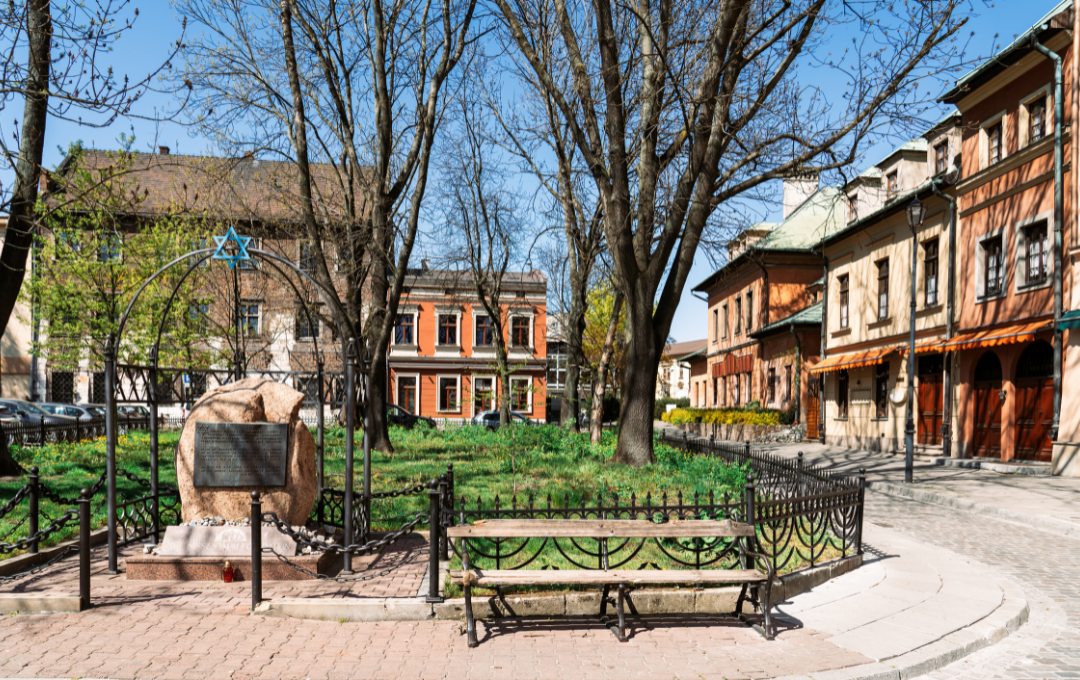
Kazimierz restaurants — the Jewish quarter has the best concentration of good, independently-owned restaurants in Krakow. Avoid the main tourist strip on Szeroka Street and walk one block in any direction. Prices are higher than milk bars but still reasonable by Western European standards.
Stary Kleparz market — the covered market north of the Barbican, open Monday to Saturday. Cheese, sausage, bread, seasonal produce, pickles. This is where Krakow actually shops for food, and where you will understand the raw ingredients behind everything you have been eating all week.
One more thing — vodka
Polish vodka is not a footnote. It is a food group.
Krakow has a genuine craft vodka scene alongside the mainstream brands. Drink it neat, chilled, in small glasses — the Polish way. Try żubrówka (bison grass vodka, with a distinctive herbal note), wiśniówka (sour cherry liqueur, technically not vodka but close enough), and krupnik (honey vodka, which tastes like liquid amber and warms you from the inside out in winter).
The best way to experience Krakow’s vodka culture is on a guided tasting — a local expert will walk you through the regional distilleries, the proper etiquette and the foods that pair with each variety. It is two hours that change your relationship with a spirit you thought you already knew.