The debate about who invented vodka — Poland or Russia — has been running for centuries and shows no sign of resolution. Both countries have put the question before international courts and trade bodies. Poland’s case rests on a document from 1405 in the court registry of Sandomierz, which contains the earliest known written reference to something called “wódka.” Russia counters with its own historical claims. The argument is unlikely to be settled in this article, and frankly, the more interesting question is what Polish vodka actually is, what distinguishes it from everything else, and how to drink it correctly.
A Brief History
The word wódka — a diminutive of woda, water — appears in Polish historical records from the early 15th century, though the substance it referred to at that time was closer to a medicinal distillate than the spirit we know today. By the 16th century, vodka had become a recreational drink, and in 1534 the Polish physician Stefan Falimierz published a treatise on its distillation, noting among its properties that it was useful for “increasing fertility and awakening lust.” Medical guidance has evolved considerably since.
Production in the 16th century was primarily from rye, using pot stills that could achieve around 60% alcohol. The aristocracy controlled production — in 1652, the Polish nobility was granted a formal monopoly on manufacture and sale, a situation that lasted until the 19th century. In 1782, the first modern industrial distillery opened in Lwów (now Lviv, Ukraine), and by the end of the 18th century, industrial production had transformed vodka from an aristocratic privilege to a mass-market spirit.
The 20th century brought nationalisation — in 1925, production was consolidated into a state monopoly — which created the communist-era landscape of state brands that most older Poles remember. After 1989, privatisation followed, and many of the most recognisable Polish brands were acquired by international spirits groups: Wyborowa by Pernod Ricard, Żubrówka eventually by Roust, Belvedere by LVMH. The traditional recipes, production methods, and Polish ingredients remained; the ownership changed.
Today, Polish vodka carries a Protected Geographical Indication under EU law. To be labelled Polish vodka, a spirit must be produced exclusively in Poland, from potatoes or traditional cereals — rye, wheat, barley, oats, or triticale (a wheat-rye hybrid).
What Makes Polish Vodka Different
The base ingredient matters more than many casual drinkers assume. Polish vodka is made primarily from rye, wheat, or potato, each of which produces a noticeably different spirit:
Rye vodka is the traditional Polish style — drier, slightly spicy, with a characteristic cereal bite that persists through the finish. Rye has been the foundation of Polish distilling for centuries, and the best rye vodkas have a complexity that rewards attention. Brands like Wyborowa (1823), Żubrówka, Belvedere, and Sobieski are all rye-based.
Wheat vodka is lighter and more neutral than rye, with subtle floral notes and a softer mouthfeel. Some purists consider wheat vodka less interesting for drinking neat; it works particularly well in cocktails where the base needs to be clean rather than characterful.
Potato vodka is milder and creamier than grain vodkas, with a slightly dense, almost oily texture that distinguishes it immediately. The best potato vodkas — Chopin, Luksusowa, Młody Ziemniak — are genuinely distinctive rather than simply neutral. They are also gluten-free, which matters to some drinkers. Potatoes became significant in Polish vodka production in the 19th century when they proved more economically practical than grain in certain regions.
The production standards for Polish vodka are strict. Distillation must take place in Poland; ingredients must be grown in Poland; no artificial additives are permitted beyond water used for dilution. The resulting spirit must reach 40% ABV for the standard product (flavoured varieties range from 30–40%).
The Essential Brands
Żubrówka (Bison Grass Vodka) is the single most internationally recognised Polish vodka and one of the most distinctive flavoured spirits in the world. Made from rye and infused with bison grass from the Białowieża forest — the last primeval forest in Europe, home to the European bison — it has notes of woodruff, vanilla, coconut, and almond, with a characteristic faint yellow-green tint. Each bottle contains a single blade of dried bison grass, inserted by hand. The classic serving: mixed with apple juice over ice, a combination Poles call szarlotka (apple pie) or Apple Pie cocktail. As an international flavoured vodka this is considered the gold standard — the only “bartender-approved flavoured vodka” in many professional circles.
Belvedere is Poland’s most famous premium vodka internationally and the one most likely to appear at upscale bars and in duty-free shops worldwide. Made from Dankowskie Gold Rye at the Polmos Żyrardów distillery (which has been producing vodka since 1910) using quadruple distillation, it is smooth, slightly sweet, with a long clean finish. The bottle features the Belvedere Palace in Warsaw — the presidential residence. Now owned by LVMH, though all production remains in Poland.
Chopin is the most celebrated potato vodka, named after the composer. Made in a small family-owned distillery in Krzesk, it is one of the few premium vodkas that operates without corporate ownership. The potato version has a characteristic subtle apple note and a creamy, full-bodied texture. The rye and wheat expressions are also produced, each single-ingredient and each different in character. Chopin is among the most decorated Polish vodkas in international competition.
Wyborowa — the name means “exquisite” — has been produced from a single Polish rye variety since 1823, making it one of the oldest continuously produced vodka brands in the world. At under 200 years of continuous production, it holds a place in the history of industrial distilling that few spirits brands can match. Now owned by Pernod Ricard, though it remains one of the ten best-selling vodka brands in the world’s most popular bars.
Luksusowa (“luxurious”) has been produced since 1928 from Polish potatoes. Triple-distilled, clean and creamy, it is one of the most accessible potato vodkas available — less expensive than Chopin, with comparable character. The name’s claim to luxury is justified more by the spirit’s texture than its price point.
Sobieski is named after King Jan III Sobieski, who led the Polish-Lithuanian forces that relieved the Ottoman siege of Vienna in 1683. Made from Dankowski rye and Oligocene spring water, it is widely available and represents one of the better budget rye vodkas. Ranked number one by the Beverage Tasting Institute in 2007. Famously associated with Bruce Willis, who appeared in advertising and briefly held an ownership stake.
Starka is a Polish spirit with roots in the 15th century, made from rye spirit and aged in oak barrels — sometimes for decades. It was traditionally produced by noble families to commemorate the birth of a child, then buried or cellared and opened on the child’s wedding day. The aged version has notes of vanilla, dried fruit, and wood that bring it closer in character to a light brandy than a conventional vodka. It is one of Poland’s most distinctive and historically interesting spirits and is significantly underknown internationally.
Nalewka — Poland’s Other Tradition
Alongside vodka, Poland has a parallel tradition of nalewka: a spirit produced by infusing or macerating fruit, herbs, berries, or nuts in high-strength alcohol, then typically sweetening the result and ageing it. The distinction between nalewka and flavoured vodka is that nalewka is genuinely an infusion — the flavour comes from actual ingredients — rather than a vodka with added essences.
Home production of nalewka has been a Polish tradition for centuries. Plum, cherry (wiśniówka), blackcurrant, quince (pigwówka), and elderberry are among the most common bases. Serious home distillers age their nalewkas in glass jars or small oak casks for months or years. The results vary enormously.
Krupnik is the most traditional commercial nalewka — a honey liqueur with herbs and spices, originally attributed to Benedictine monks in the 16th century. Sweet, warming, and complex, it served during both World Wars as a military disinfectant and morale-builder simultaneously. It can be served warm (as a winter drink) or cold.
Żołądkowa Gorzka (“stomach bitters”) is the best-selling spirit in Poland by volume — more popular than any plain vodka. An herbal, slightly sweet liqueur produced in Lublin since 1950, it sits somewhere between vodka and amaro in character, with a warming, lightly spiced profile. Most Poles will be familiar with it from family gatherings.
How Poles Actually Drink Vodka
Traditional Polish vodka culture differs from how the spirit is consumed in most Western countries. The key elements:
Vodka is served with food. The concept of drinking vodka without eating — a “zagryzka” (literally “afterbite”) — is embedded in Polish drinking culture. The classic zagryzkas are pickled cucumber (ogórek kiszony), herring in oil, bread with lard, and smoked meat. The food is not optional; it is part of the experience, moderating alcohol absorption and providing a flavour contrast that makes both the food and the vodka taste better. The pickled cucumber in particular is a combination of stunning efficiency: the brine hydrates, the salt replenishes minerals, and the acidity cuts through the residual heat of the spirit.
Vodka is not frozen. The fashion for serving vodka from the freezer — which produces a syrupy, viscous spirit that tastes of almost nothing — is modern and somewhat frowned upon by traditionalists. The correct temperature is well-chilled but not frozen: around 4–8°C, which allows the aromas and flavour character of the spirit to be perceptible. As the saying goes: when vodka is frozen, all vodkas taste the same.
The toast. “Na zdrowie” (nah zdrov-yeh) — “to your health” — is the standard Polish vodka toast. It is said before drinking, not after. You look at the people you are drinking with. You drink.
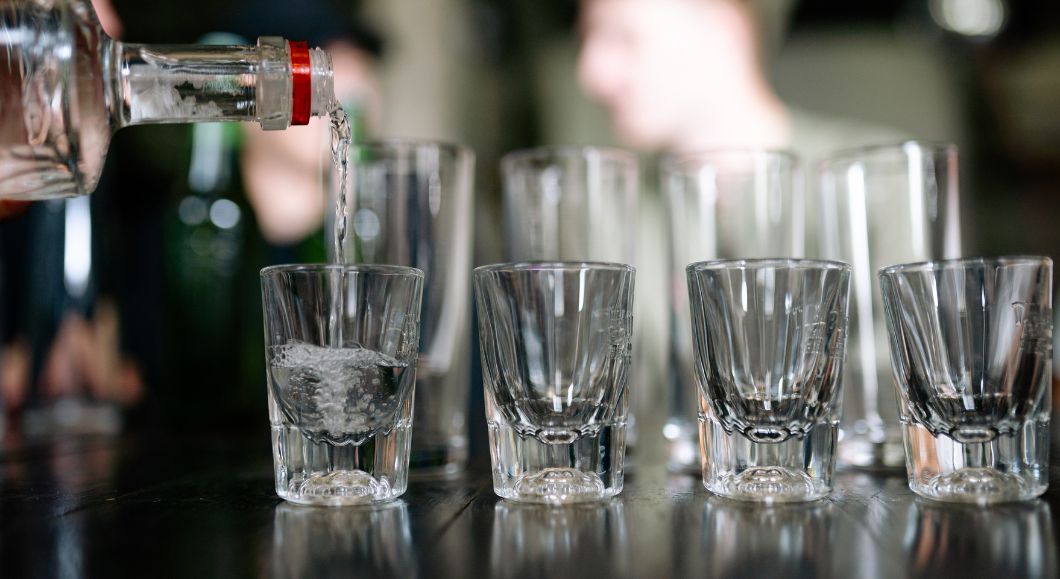
Shots are sipped, not slammed. The image of vodka as a liquid to be consumed as rapidly as possible — head back, no pause — reflects a different drinking culture. In Polish tradition, a shot is drunk in a single motion but not violently; the spirit is given a moment to register before the zagryzka follows.
Where to Drink Vodka in Poland
Every city in Poland has a bar culture organised around vodka. The specific Polish institution worth seeking out is the pijalnia wódki i piwa — the vodka and beer bar — a concept revived from the communist era that combines cheap shots (typically 5–10 PLN) with small food snacks in a deliberately retro setting. Chains like Pijalnia Wódki i Piwa operate in most cities; the experience is more interesting at independent spots that maintain the original aesthetic without becoming a theme restaurant.
The Warsaw Vodka Museum on Plac Defilad provides a comprehensive overview of Polish vodka history, production, and tasting in a single organised visit — useful as a baseline before exploring the bars.
What to Buy to Take Home
If you are looking for a bottle of Polish vodka to bring home:
For someone who appreciates flavour: Żubrówka Bison Grass or Starka — both are distinctively Polish and unlike anything made elsewhere.
For a premium gift: Chopin Potato, Belvedere, or Wyborowa Exquisite — all internationally respected and attractively packaged.
For a historically interesting conversation piece: Starka aged, or one of the premium single-vintage nalewkas from a specialist shop.
For everyday drinking: Wyborowa standard, Luksusowa, or Żytnia — solid rye and potato vodkas at accessible prices, honest representations of the Polish tradition.
The worst thing you can do is buy the cheapest possible bottle from a supermarket shelf and form an opinion of Polish vodka on that basis. At 15–20 PLN a bottle, you are buying industrial distillate, not the tradition that has been making this country’s signature spirit for six centuries.