Wroclaw’s food culture is a product of its complicated history — and that history is the most interesting thing about eating here. For most of its existence, this was a German city called Breslau, capital of Silesia, absorbed into the Polish-Lithuanian Commonwealth in the 16th century, then taken by Prussia in the 18th, then Germany through both World Wars. In 1945, the German population was expelled under the Potsdam Agreement and replaced by Poles — many of them arriving from Lwów, now Lviv in Ukraine, who had themselves just been expelled from their homes. The city changed hands, changed languages, and changed population in a matter of months.
What this history produced, culinarily, is a cuisine that belongs to the region rather than to any single national tradition. Silesian food reflects centuries of Polish, German, Czech, and Bohemian influence sitting next to each other at the same table. The result is a distinct regional kitchen that is unlike anything you’ll find in Warsaw or Krakow — earthier, more reliant on potato and dumpling, with a German influence visible in the use of smoked meats, red cabbage, gingerbread sauce, and the sheer volume of hearty, stick-to-your-ribs combinations.
Understanding this helps you eat better in Wroclaw. The city has a genuinely excellent restaurant scene — it earned 22 Michelin Guide recognitions in 2025, more than any Polish city outside Warsaw — but the most rewarding food experiences often involve seeking out the specifically Silesian dishes that you can’t find elsewhere.
The Silesian Dishes That Define the City
Kluski śląskie — Silesian potato dumplings — are the most canonical food of the region and the dish that most clearly marks Wroclaw as somewhere distinct from the rest of Poland. These are round, flat dumplings made from mashed potatoes and potato flour, distinguishable by a characteristic dimple pressed into the centre of each one. That dimple is not decorative: it’s functional, designed to hold the sauce. The texture is unusual by comparison with other Polish dumplings — dense, slightly chewy, gummy in a way that some find surprising and others immediately addictive. They are served as the canonical Sunday dinner of Silesian families: alongside beef rouladen (rolada) and braised red cabbage (modra kapusta), in a three-part combination that has been the region’s feast day meal for generations. In good Wroclaw restaurants, kluski śląskie with mushroom sauce are a reliable, excellent choice.
Rolada śląska — Silesian beef roulade — is the other half of that canonical Sunday plate. Beef rolled around pickled cucumbers, bacon, onion, and mustard, then braised in a rich sauce until the filling has merged with the meat. It requires good beef and proper slow cooking and is one of the better arguments for eating at a restaurant that takes the traditional Silesian menu seriously rather than a tourist-facing establishment serving the Polish greatest hits.
Schlesisches Himmelreich — “Silesian Heaven” — is a dish that shows the German side of the Silesian kitchen most clearly. Smoked pork cooked slowly with dried fruits, spices, and wine until the meat is tender and the sauce is sweet-savory in a way that references both Central European fruit traditions and the influence of medieval spice trade routes through Breslau. It’s one of those dishes that doesn’t quite exist anywhere else and is worth ordering whenever you see it.
Moczka — a Silesian Christmas sweet soup — is made from gingerbread soaked in dark beer with nuts, dried fruits, chocolate, and butter. It reads as a dessert by modern standards but historically occupied a stranger middle ground between sweet and savory. You’re most likely to encounter it in late November and December at restaurants that maintain seasonal Silesian menus.
Żurek śląski — the Silesian version of the sour rye soup — is said to have its origins in this region. While the national dish is effectively universal in Poland, the Wroclaw versions tend to be particularly rich and are often served in a hollowed-out bread roll. One of the best quick lunches in the city.
The Wroclaw Restaurant Scene
Wroclaw’s restaurants fall into three broad categories: the traditional Silesian and Polish establishments that anchor the city’s culinary identity; the milk bars and budget spots that serve the same cuisine at a fraction of the price; and the newer wave of ambitious cooking that has brought the Michelin recognitions.
For traditional Silesian cooking: Konspira is the most-cited recommendation in the city for hearty, authentic Polish food in an atmospheric setting — brick walls, communist-resistance memorabilia, portions that tend toward the heroic. It draws both tourists and locals and manages to maintain quality consistency. The menu is essentially a list of things that Silesian and Polish grandmothers have been cooking since before communism arrived and after it left. The bigos here is particularly good.
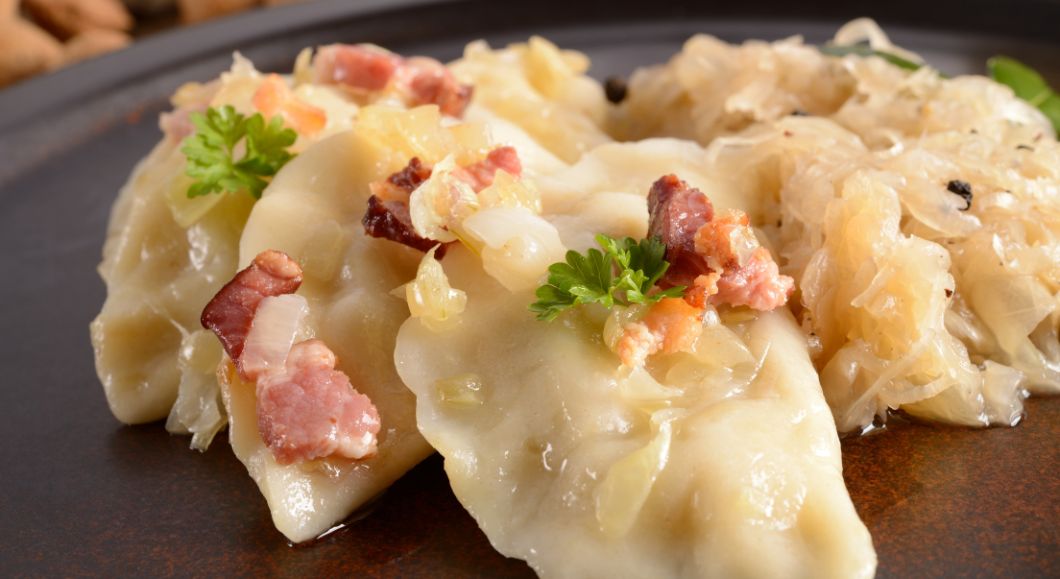
For pierogi specifically: Pierogarnia Rynek on the Market Square is convenient and reliable, with the obvious trade-off of a tourist-facing location. The baked pierogi here are worth choosing over the boiled — the crust adds texture and a slight caramelisation that boiled versions can’t match. Pierogi and Co in the university quarter is the option preferred by locals looking for more inventive fillings at a slight remove from the tourist core.
The milk bars: Bar Mleczny Miś near the university (ul. Kuźnicza 48) is the most famous cheap eat in Wroclaw, strategically positioned to feed students and anyone else who finds themselves within range. The goulash and pierogi are excellent, the queue is part of the experience, and the total bill remains genuinely shocking for what you receive. Bar Mewa across the Oder River (Bolesława Drobnera 4) is the less-visited option — quieter, more local, recommended by the residents who know the city outside the tourist zone.
For the modern Wroclaw scene: The street of Świętego Antoniego — sometimes called Wroclaw’s “hipster street” — concentrates the city’s more contemporary cafés, craft beer bars, and international-influenced restaurants in a block of 19th-century tenements that has gentrified without becoming sterile. Walk the length of it and pick whatever looks right. The Gastro Miasto festival, running along the Oder riverside from May through September, brings street food vendors and local restaurants into a series of temporary outdoor stalls that give the city’s food scene its most concentrated single-location expression.
Salt Square and the Market Surroundings
The Market Square’s smaller sibling — Plac Solny, the Salt Square — is not just a 24-hour flower market. The restaurants and cafés around and near it tend to be slightly more local-facing than those directly on the Rynek, and the quality-to-price ratio is often better. If you’re based in the Old Town and looking for dinner, the streets connecting the Market Square to the Oder — particularly Świdnicka and the lanes off it — offer a better cross-section of the city’s eating options than the Market Square itself.
The basement of the Old Town Hall contains the Piwnica Świdnicka — one of the oldest continuously operating restaurants in Europe, having served food and beer since 1273. It is expensive for what it is, and the food is solid rather than exceptional, but eating in a medieval vaulted cellar where Goethe and Schiller reportedly drank is a particular kind of experience. Order the żurek, have a glass of Silesian beer, and count it as paying for the atmosphere.
What to Drink
Wroclaw has a serious craft beer scene — the article on the city’s breweries covers this in more depth, but the short version is that Browar Stu Mostów (the 100 Bridges Brewery) and several newer taprooms in the Nadodrze district have established Wroclaw as one of the best craft beer cities in Poland. Polish craft beer has developed rapidly in the last decade, and Wroclaw has been at the front of that movement.
For spirits, the local tradition leans toward flavoured vodkas and nalewki — Polish fruit liqueurs, typically made by steeping seasonal fruit or herbs in neutral spirit for weeks or months. At better bars and restaurants, nalewki are served as digestifs or aperitifs and represent a genuinely distinct local drinking culture that predates both communism and the craft spirits revival by centuries.
Practical Notes
Wroclaw eats earlier and closes earlier than Warsaw or Krakow. Many traditional restaurants stop taking kitchen orders by 9 or 10 PM, and the milk bars typically close by 5 or 6 PM. If you’re planning dinner, aim for 7 PM rather than 9.
Reservations are recommended for the better restaurants on weekends, and essential for anything in the Michelin-recognised tier. The city’s student population keeps prices reasonable across the board — Wroclaw is one of the most affordable places to eat well in Poland, and “affordable” here genuinely means that a very good meal in a proper restaurant costs less than a mediocre meal in a tourist café in Paris.
The Gastro Miasto riverside food festival is worth building a visit around if your trip falls between May and September. It runs on weekends along the Oder and showcases the city’s food scene in concentrated form. Entry is free; bring cash for the stalls.
One last thing: if you see kluski śląskie on a menu, order them. You won’t find them like this outside Silesia. The dimple in the centre is designed to hold the sauce, and whoever designed that detail understood something important about how good food works.