Gdansk sits at the intersection of three food traditions, and all three are worth your attention. The first is straightforwardly Polish — pierogi, żurek, schabowy, bigos, the whole repertoire of Central European comfort cooking. The second is Baltic coastal — smoked fish fresh from the harbour, herring in every conceivable preparation, perch and flounder pulled from the sea a few kilometres away. The third is Kashubian — the food of the indigenous Kashubian people who have lived in the hills and forests west of the city for centuries, with its own distinct flavour profile built around buckwheat, smoked meats, forest mushrooms, and fish preparations that predate the Polish-German tensions of the 20th century.
Understanding these three layers helps explain why eating in Gdansk is a different experience from eating in Warsaw or Krakow. The city’s history as a trading port — Baltic Sea, the Vistula River, central European trade routes all converging here — created a culinary culture that absorbed influences from merchants, fishermen, and the highland Kashubians simultaneously.
The Dishes That Define Gdansk
Baltic herring (śledź) is the dish that most clearly distinguishes Gdansk’s food culture from the rest of Poland. Herring has been the economic backbone of the Baltic coast for centuries — it was essentially the oil of the medieval trading world, and Gdansk grew wealthy partly on its trade. Today śledź appears on menus in multiple preparations: marinated in oil and onions (the classic), in cream sauce with apples, with sour cucumbers and rye bread, or in the Kashubian style, prepared with a process that takes several days and involves soaking, layering, and spicing with local herbs. At any restaurant near the Old Town that takes its food seriously, the herring section of the menu is worth careful attention.
Smoked fish from the Baltic is everywhere in Gdansk, and unlike smoked fish elsewhere in Poland, you can often find it genuinely fresh. Smoked mackerel is the everyday version — bought from street vendors near the waterfront, still warm from the smoker, eaten with bread and a squeeze of lemon. Smoked salmon and smoked eel appear on better restaurant menus. The smell of a smoker near the market or riverside is one of Gdansk’s reliable sensory signatures.
Freshwater fish from the rivers — perch, trout, pike — are also fixtures of the city’s restaurant scene, reflecting the Vistula delta geography. Fried perch is particularly good at the better traditional restaurants on the waterfront; the flesh is firm and sweet and the local preparation of coating in seasoned breadcrumbs keeps it from becoming greasy.
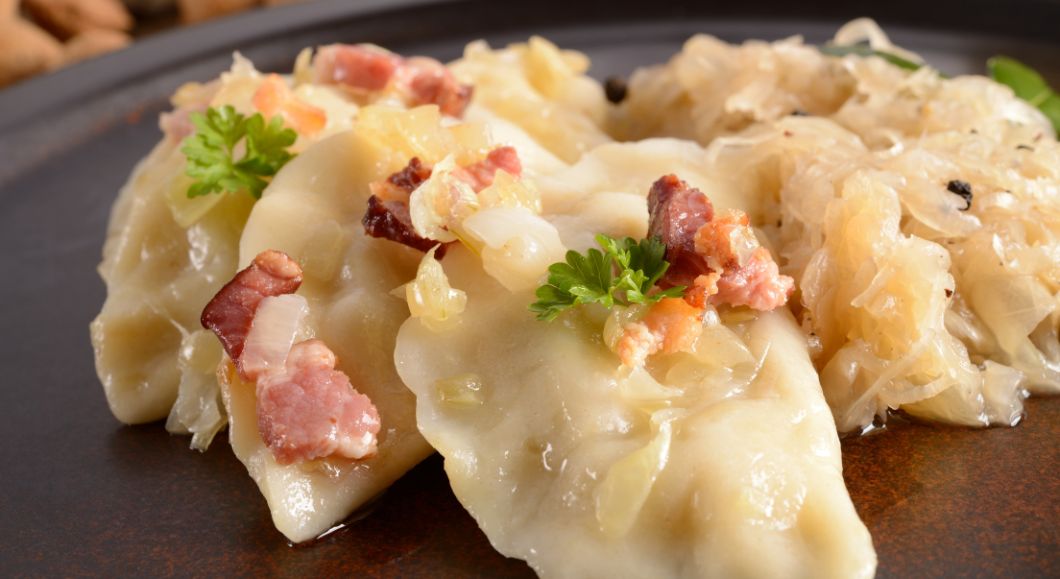
Kashubian pierogi are a regional variation worth specifically seeking out. While standard Polish pierogi ruskie (potato, white cheese, onion) are available everywhere, the Kashubian versions are stuffed with herring, buckwheat and smoked meat, or forest mushrooms — denser, earthier, with a flavour that tastes distinctly of this particular place.
Żurek — the sour rye soup — is as important here as anywhere in Poland, and the versions in Gdansk are typically robust, served with kielbasa, a hard-boiled egg, and sometimes horseradish. Often presented in a hollowed-out sourdough roll.
Gingerbread has been baked in Gdansk since the medieval period, brought by merchants trading up the Baltic. It’s less famous than Torun’s gingerbread but the local version — less sweet, more spiced, often glazed with honey — is worth trying from one of the city’s historic bakeries.
Goldwasser: The City’s Own Drink
No food guide to Gdansk can skip Goldwasser — the liqueur with 23-carat gold flakes that has been associated with this city since 1598, when it was first distilled in a building on Szeroka Street that later became the Pod Lososiem restaurant. The original recipe, containing over 20 herbs and spices including cardamom, cloves, cinnamon, lavender, coriander, and juniper, was produced in Gdansk until 2009; production now takes place in Germany, but the drink’s identity remains tied to the city.
The local legend is worth hearing even if you suspect the restaurant had a hand in spreading it: Neptune, angered by residents throwing coins into his fountain on Dlugi Targ, struck his trident against the basin — shattering gold throughout the water and transforming it into the golden liqueur. One merchant, quick-thinking, hauled it away in barrels. Another, more virtuous version holds that Neptune, grateful for the coins, blessed the water with gold for eternity. The Pod Lososiem restaurant, which stood where the original distillery operated, naturally became the place where Goldwasser was most authentically served — and remains so conceptually, though the restaurant has changed hands and character over the years.
You can taste Goldwasser at the Goldwasser restaurant on the Motlawa riverfront, at Pod Lososiem (if it’s in one of its operational phases — it has been through several reinventions), or at various bars in the Old Town. It’s sweet, herby, viscous, and the gold flakes are entirely non-toxic and pass through the body unchanged — a fact the Gdansk liqueur trade has been happy to mention for 400 years.
Where to Eat: A Practical Guide
For pierogi: Pierogarnia Mandu is the most-mentioned spot in Gdansk by everyone from food writers to local residents. The pierogi are made fresh to order — which means a wait of 30–45 minutes in busy periods — but the quality justifies it. Expect a queue outside on weekend evenings. Book if you can, or arrive early. The mushroom cream sauce that accompanies some of the dumplings is particularly good. A second strong option is Pierogarnia Stary Mlyn, which tends to be slightly less crowded and equally serious about its filling-to-dough ratio.
For traditional regional cooking: Gdanski Bowke on the Dlugie Pobrzeze waterfront serves regional specialties with its own craft beer. The menu leans heavily on meat, fish, and game — fried perch, river trout, pork ribs in local style — with a 19th-century port atmosphere (dark wood, exposed brick) that makes the setting match the food. Popular enough to require a reservation at peak times, but good value for the waterfront location.
For Kashubian cuisine: The Kashubian-themed restaurants in the Old Town — including Velvetka, a small cellar restaurant near the Town Hall and Neptune Fountain — offer a focused window into the regional cooking of the hills west of the city. Potato cake filled with smoked bacon, Kashubian fish soup with mussels, and main courses served in hollowed bread rounds are the signatures here. Small, atmospheric, and genuinely different from standard Polish restaurant fare.
For fish: The waterfront restaurants along Dlugie Pobrzeze (where the old granary buildings have been redeveloped into dining) generally offer the most reliable fresh Baltic fish. Prices are elevated by the location, but the quality tends to justify it, and the views across the Motlawa to Granary Island are hard to argue with. Ask what’s freshly caught rather than defaulting to the menu standards.
For a quick lunch at local prices: The Slony Spichlerz food hall on Granary Island consolidates a dozen or so small restaurant stalls under one roof — Polish traditional, pizza, Japanese, burgers, Greek. It’s aimed at a younger crowd and manages to avoid feeling like a tourist trap. For a more traditional cheap meal, Bar Mleczny Stagiewna serves good classic Polish food at milk bar prices in an unpretentious setting a short walk from the waterfront.
For Pellowski bakeries: This Gdansk institution has been operating since before World War II and now runs about a dozen locations across the city. The Old Town branch is convenient for breakfast pastries and coffee with a view of the morning activity on Dluga Street. Quality can be uneven — the cakes are reliably good, the gingerbread variable — but for the experience of a Gdansk institution, it’s worth a stop.
The Waterfront: What to Know
The restaurants lining the Motlawa riverside — particularly Dlugie Pobrzeze and the side of Granary Island facing the Old Town — are predictably tourist-facing, with prices to match. This doesn’t mean they’re bad. Several serve genuinely good fish and regional food. But the approach should be selective: look at the menu before sitting down, notice whether the specials reflect what’s seasonal and local, and avoid any restaurant where the menu is in seven languages and the waiter is standing on the pavement trying to usher you in.
The waterfront evening is worth experiencing for the views and atmosphere regardless of where you eat. The best strategy is to have a serious meal at a restaurant one or two streets back from the river — where rents are lower and the pressure to recoup tourist footfall is reduced — then move to the waterfront for a drink or a beer on the terrace afterward.
Street Food Worth Knowing
Obwarzanki krakowski — the sesame-and-poppy-seed ring bread familiar from Krakow — appears at street stalls in Gdansk too, usually near the Market Hall. Buy one warm and eat it while walking.
Zapiekanka (the open-faced baguette with mushrooms, cheese, and various toppings, baked or grilled) can be found from food vendors near the AmberSky ferris wheel area in the evenings. It’s the Polish equivalent of a slice of pizza after midnight — not sophisticated, genuinely satisfying.
The smoked mackerel vendors near the river are the single best street food option the city offers. Find one where fish is actually being smoked (the smell will locate it for you), pay whatever they ask, eat it immediately.
Practical Notes on Eating in Gdansk
The city’s restaurant scene has become genuinely good, and the tourist trap problem — though real on the main waterfront strip — is navigable with a little lateral movement. Restaurants one street back from Dlugi Targ and the river are typically better value and more locally oriented.
Gdansk is not Warsaw or Krakow in terms of restaurant innovation — it’s slightly less frenetic, more focused on its own regional identity. That’s actually a feature rather than a limitation. The food that’s specific to this city — the Baltic fish, the Kashubian dishes, the Goldwasser — is more worth your time than imported trends, and you’re more likely to find it here than anywhere else.
If you want a single meal that crystallises what Gdansk tastes like, order: herring in cream with apple, a bowl of żurek, fried perch with boiled potatoes, and a small glass of Goldwasser at the end. It costs less than you’d expect and tastes like the Baltic coast.