Warsaw’s art museum landscape shifted significantly in October 2024 when the Museum of Modern Art opened its long-awaited permanent building on Plac Defilad. For two decades the institution had operated as a nomadic organisation — borrowing spaces, building a collection, accumulating critical reputation without a home. The new building, designed by New York firm Thomas Phifer and Partners and funded entirely by the city of Warsaw, changed the equation: overnight, Warsaw had a contemporary art museum capable of competing with its counterparts in Berlin, Amsterdam, and Paris.
That opening makes 2025 and 2026 a particularly good moment to visit Warsaw for art. The MSN is newly installed, generating conversation internationally. The National Museum — one of the largest art collections in Central Europe — has continued to develop. The Zachęta national gallery maintains its program of provocative contemporary exhibitions. And several smaller institutions offer specific collections impossible to find elsewhere.
This guide covers the essentials: what each museum actually contains, who it suits, and how to plan your visit.
Museum of Modern Art (MSN Warsaw) — The Arrival
Address: Plac Defilad 1 | Website: artmuseum.pl | Opened in new building: October 2024
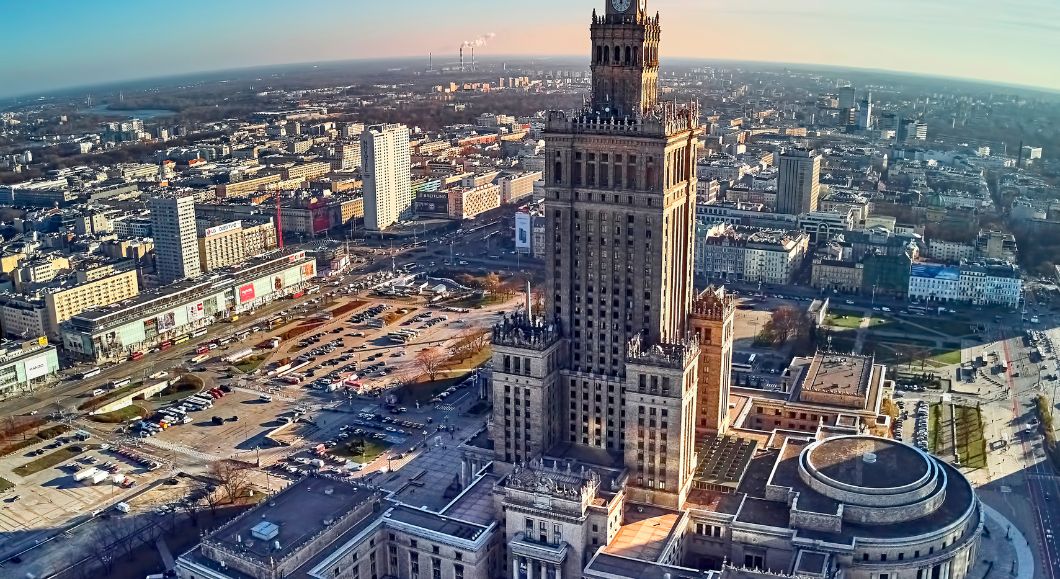
The building is the conversation: a 100-metre-long horizontal white concrete box placed in direct, deliberate dialogue with the Palace of Culture and Science immediately to its west. The Soviet-era skyscraper is vertical, ornate, and carries the weight of Stalinist symbolism; the MSN is horizontal, minimal, and clad in hand-cast white concrete. The architects described the building as a “vitrine of light” — the galleries on the upper floors glow with diffused natural light through skylights designed so sunlight never strikes the artworks directly. The drama happens in the atrium, where a double staircase sweeps upward in a gesture that somehow manages to be both functional and theatrical.
The museum was named one of TIME’s World’s Greatest Places for 2025 and Lonely Planet’s top museum opening globally. 50,000 people visited in the first weekend.
The collection holds over 4,300 works — half Polish, half international — covering art from the 1950s to the present. Artists represented include Magdalena Abakanowicz, Alina Szapocznikow, Wilhelm Sasnal, Artur Żmijewski, and Monika Sosnowska from the Polish side, alongside significant international holdings. There is no fixed permanent hang: MSN deliberately rejects the canonical approach, presenting the collection through rotating thematic arrangements that change every six months. What you see on one visit may be arranged entirely differently six months later. This is a curatorial philosophy, not institutional disorganisation.
The ground floor of the museum is always free and open without a ticket — a café, bookshop, and rotating exhibitions of emerging Polish artists occupy this level. The 150-seat cinema shows art films and hosts screenings with talks. Audio guides in Polish and English are available free of charge at reception.
Practical: Tickets purchased online; weekends can have queues. Evening tickets (from 18:00) are cheaper. Allow 2–3 hours minimum for the collection floors. Staff recommend starting from the top floor and working down.
National Museum in Warsaw (Muzeum Narodowe) — The Foundation
Address: Al. Jerozolimskie 3 | Website: mnw.art.pl | Free entry: Tuesdays
With over 780,000 objects across five floors of a 1938 modernist building, the National Museum is the largest art museum in Warsaw and one of the most significant in Central Europe. It drew over 1.5 million visitors in 2025, ranking it among the top 50 most-visited art museums in the world. The collection is encyclopaedic in the European tradition: ancient to contemporary, Polish to international, fine art to applied arts to decorative objects.
Several galleries deserve specific mention:
The Faras Gallery contains the largest collection of Nubian Christian art outside Sudan — painted murals, figures of saints, portraits of bishops and Nubian kings, excavated by a Polish archaeological team from a cathedral submerged by Lake Nasser after the construction of the Aswan Dam in the 1960s. This is genuinely irreplaceable material that exists in Warsaw due to historical accident and Polish archaeological expertise. Nothing like it is available anywhere else in Europe.
The Gallery of Medieval Art holds altarpieces and religious paintings from Silesia, Lesser Poland, and Greater Poland, including remarkable gilded pieces from the 14th and 15th centuries. The medieval collection gives context to centuries of Central European religious art.
The Gallery of 19th Century Polish Art is anchored by Jan Matejko’s Battle of Grunwald — an enormous oil painting, 4 by 10 metres, depicting the 1410 defeat of the Teutonic Knights by the Polish-Lithuanian forces. The painting is a nationalist monument in paint: Matejko spent six years on it and it became one of the most famous works in Polish art history.
The computer-controlled LED lighting system, installed during renovations in 2011–12, individually enhances the quality of each work — a detail that sounds technical but makes a perceptible difference to how the paintings read.
Practical: Free on Tuesdays (expect crowds from tour groups); students under 26 pay 1 PLN on weekdays. Allow at least 2–3 hours; a full visit requires considerably more.
Zachęta National Gallery of Art — The Provocateur
Address: Pl. Małachowskiego 3 | Website: zacheta.art.pl
The Zachęta was the first building in Warsaw constructed specifically to exhibit art, dating from 1900, and has been the site of Polish art’s most contested moments ever since. In 1922, the president of Poland was assassinated in the gallery — shot dead during a public exhibition. In 2003, a sculpture by Maurizio Cattelan depicting John Paul II crushed beneath a meteor caused a national scandal that eventually reached the Polish parliament. The Zachęta has been uncomfortable with complacency for its entire existence.
Today it operates as Poland’s national gallery of contemporary art — not a collecting institution but a programme-driven space for temporary exhibitions. The curatorial approach tends toward the politically and socially engaged. Work shown here over the past decade has addressed the Ukraine conflict, post-communist memory, LGBTQ+ representation, and feminist art history, among much else. International artists are regularly shown alongside Polish work. The Venice Biennale’s Polish Pavilion has been organised through the Zachęta, which gives the gallery a direct line to the major international conversations in contemporary art.
The building itself — neo-Baroque, with a rotunda entrance and large exhibition halls — is elegant without being oppressive. The scale is human; the shows rarely are.
Practical: Exhibitions change every few months; check the website before visiting for current programme. Admission varies by exhibition; some are free. Closed Mondays.
Poster Museum at Wilanów (Muzeum Plakatu) — The World’s First
Address: Wilanów, ul. Stanisława Kostki Potockiego 10/16 | Website: postermuseum.pl
Established in 1968, the Poster Museum in the Wilanów Palace complex is the oldest museum in the world dedicated exclusively to posters. This is a specific distinction that carries genuine cultural weight: Poland has a poster art tradition that is internationally recognised as one of the most significant in 20th-century graphic design, and this museum is where that tradition is most thoroughly documented and displayed.
The Polish poster school — which flourished from the 1950s through the 1980s, partly because political censorship pushed artists toward graphic art as a medium of expression — produced work characterised by painterly surrealism, symbolic complexity, and willingness to treat commercial and cultural commissions as opportunities for serious artistic statement. Film posters, theatre posters, circus posters: all were elevated into something approaching fine art. The collection holds tens of thousands of pieces, and changing exhibitions explore both historical and contemporary work.
The museum is housed in an outbuilding of the Wilanów Palace, which is itself worth visiting separately. The grounds are extensive and the journey from the city centre takes about 30 minutes.
Practical: A branch of the National Museum; combined tickets available. Allow 1.5–2 hours. Located in the Wilanów district — accessible by bus from the city centre.
Królikarnia Sculpture Museum — Off the Main Track
Address: ul. Puławska 113a | Website: krolikarnia.mnw.art.pl
The Królikarnia (“Rabbit Warren”) is another branch of the National Museum, occupying a late 18th-century Neoclassical villa in the Mokotów district — one of the finest examples of its architectural style in Warsaw. The building survived the Second World War largely intact, which gives it a quality of historical continuity unusual for the city.
The permanent collection focuses on the sculpture of Xawery Dunikowski, one of the most significant Polish sculptors of the 20th century, whose work encompasses expressionist figuration, monumental public pieces, and work made during his imprisonment in Auschwitz during the war. The Auschwitz-period sculptures — small, rough, urgent — are among the most powerful in the collection.
The garden surrounding the villa hosts additional outdoor sculpture and is pleasant in any season. In summer the grounds have a relaxed quality that the city-centre museums can’t match.
Practical: Quieter than the main museums; good for visitors who want space to think. Allow 1–2 hours. Accessible by bus or tram from the centre.
Planning Your Visit
Free entry days vary by museum. The National Museum is free on Tuesdays; the Warsaw Uprising Museum (not an art museum but often visited alongside) is free on Mondays; the Zachęta has variable free days. Checking individual websites before visiting avoids paying for something you could see without charge.
Getting between museums: The National Museum, Zachęta, and the MSN are all within walking distance of each other in the city centre — under 20 minutes on foot between any two. The Poster Museum at Wilanów and the Królikarnia require bus or tram connections from the centre.
What to combine: MSN and National Museum in a single day is ambitious but achievable if you arrive early. The Zachęta is small enough to combine with either. Wilanów and Królikarnia work as their own day out, combined with the Wilanów Palace and grounds.
Time: Warsaw’s art museums collectively reward several days of visiting rather than a single rushed circuit. The National Museum alone justifies multiple visits. For visitors in Warsaw for a short stay, the MSN and the Zachęta give the most immediate sense of where Polish art and international contemporary art currently meet.