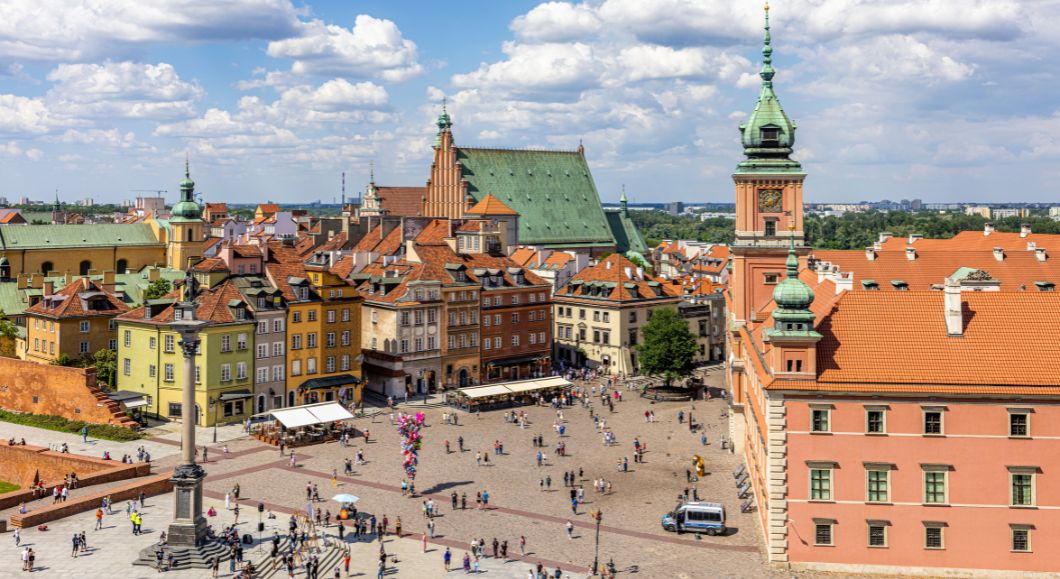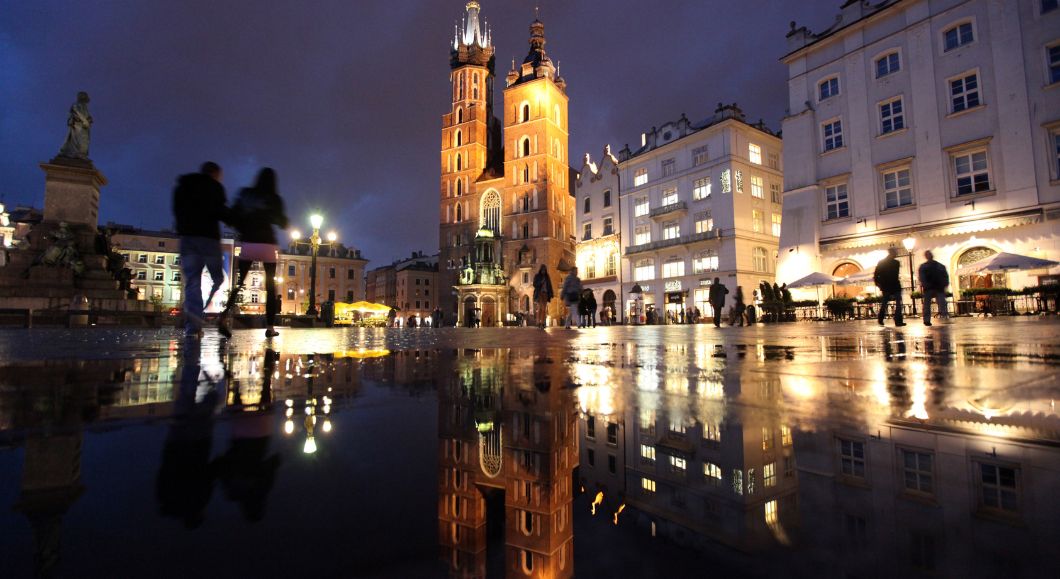
Most people who visit Krakow see the same things: the Market Square, Wawel Castle, Kazimierz, maybe Schindler’s Factory or Wieliczka. These are genuinely worth seeing, and the guides covering them are honest about why. But Krakow has more depth than any standard itinerary captures, and the city rewards visitors who go slightly sideways from the obvious route.
These are not contrarian suggestions designed to avoid tourists at all costs. They are places that locals actually go, that reward genuine curiosity, and that tend to be missed not because they are inferior to the main attractions but simply because they require a bit of navigation to reach or a bit of prior knowledge to appreciate.
1. Collegium Maius Courtyard
Most visitors walk past the heavy wooden gate on Jagiellońska Street without stopping. Step through it and you enter one of the most quietly beautiful spaces in Krakow: the Renaissance courtyard of the Collegium Maius, the oldest university building in Poland, where Nicolaus Copernicus studied in the late 15th century.
The courtyard itself is free to enter and needs no ticket. Three storeys of arcaded galleries surround a central well, the whole thing roughly 600 years old and remarkably intact. Inside there is a university museum with Copernicus’s astronomical instruments among the exhibits, but the courtyard alone justifies the five-minute walk from the Market Square. It is often nearly empty. At the hour, a small mechanical procession of academic figures appears in a window above the courtyard archway.
Address: ul. Jagiellońska 15 | Courtyard: free, open daily
2. Zakrzówek Reservoir
Ten minutes by bike or tram from the Old Town, Zakrzówek is a disused limestone quarry that filled with groundwater and became one of the most surreal natural spaces in any European city. The water is turquoise and extraordinarily clear. Limestone cliffs rise from the edges. In summer, locals swim here, cliff-jump (at their own risk) from the lower ledges, and lie on the rock terraces in the kind of democratic outdoor leisure that European cities rarely manage this close to their centres.
The reservoir is popular with locals and essentially unknown to tourists. There are no entrance fees, no infrastructure, no organised anything — just the water, the cliffs, and whoever else decided to come. Bring your own food and drink.
Getting there: Tram to Salwator or cycle path along the Vistula | Cost: Free
3. Krakus Mound
There are four earthen mounds in Krakow, built in different eras for different purposes, each sitting on the city’s landscape like a punctuation mark. The most visited is Kościuszko Mound on the western edge of the city. The one worth finding is Krakus Mound — older, quieter, less visited, and with a better view.
The mound is prehistoric in origin, said to mark the tomb of Krakus, the city’s legendary founder. Nobody knows for certain what is inside it or when it was built. What is known is that climbing its grassy slopes takes about ten minutes and the view from the top — the city spread out to the north, the Vistula curving below, the Old Town spires visible in the middle distance — is one of the best in Krakow. Locals come here for picnics, for the solstice, and for a kind of quiet that the Old Town doesn’t offer.
The Rękawka Festival takes place here each spring, shortly after Easter — a reconstruction of Slavic traditions involving medieval dress, crafts, and food. Worth timing your visit around if you happen to be in Krakow at the right moment.
Location: Podgórze district, about 2 km from Wawel | Cost: Free
4. Liban Quarry
Adjacent to the Krakus Mound, the Liban Quarry has the strangest afterlife of any industrial site in Krakow. It was a working limestone quarry, then a Nazi forced labour camp during the occupation, then — most surreally — the location where Steven Spielberg filmed the concentration camp sequences of Schindler’s List in 1993. The film set was left in place and nature has slowly reclaimed it: the guard towers and barracks props from the film are now overgrown with vegetation, rusted, partially collapsed, sitting in a landscape of wildflowers and weeds.
There is no official visitor site and no entrance fee. You walk in through a gap in the fence on Jerozolimska Street. The effect is genuinely eerie — a film set about history decaying into actual historical landscape, the layers of representation and reality collapsing into each other. Urban explorers find it compelling; historians find it uncomfortable; most tourists don’t know it exists.
Location: ul. Jerozolimska, Podgórze | Cost: Free | Note: Informal access, watch your footing
5. Tyniec Abbey
Twelve kilometres southwest of the city centre, on a limestone cliff above the Vistula, the Benedictine Abbey of Tyniec has been occupied continuously since the 11th century — which makes it one of the oldest active monastic communities in Poland. The setting is extraordinary: the river curves around the base of the cliff, the abbey buildings crown the rock above, and the view downstream toward Krakow is the kind of thing that explains why medieval monks chose elevated river cliffs for their foundations.
You can visit the abbey courtyard, join a guided tour of the church and cloister, and browse a small shop selling products made by the monks: herbal liqueurs, jams, mead, honey, and cosmetics. The liqueur is legitimately good and makes an excellent souvenir for anyone who has run out of things to bring home.
Getting to Tyniec is part of the experience: by bicycle along the Vistula riverpath (around 45 minutes), by local bus from the city centre, or by boat during summer. The boat is the best option if available — the approach by river, with the cliff and abbey rising ahead of you, is worth the trip on its own.
Getting there: Bus 112 from the city centre, or cycle/boat in summer | Cost: Small fee for abbey interior tours
Choose one of our tours in Krakow
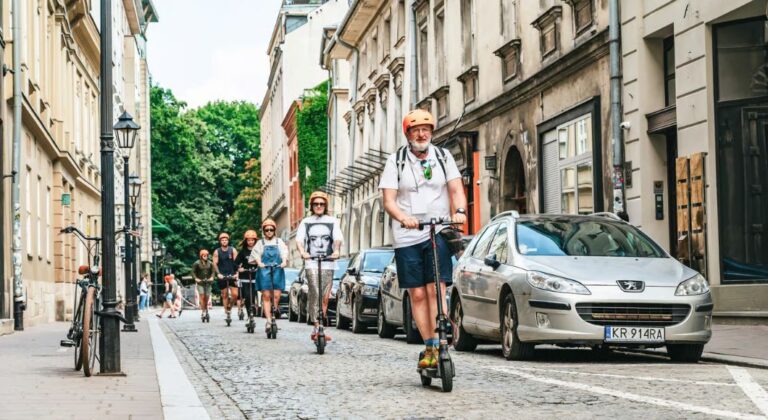
Explore Kraków in a fun and eco-friendly way on a 2.5-hour guided e-scooter tour with food…
Read More →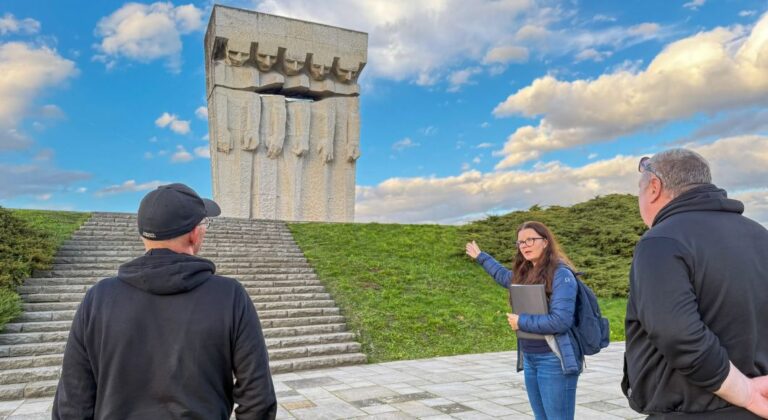
Explore the history of the Plaszow Concentration Camp on a reflective 2-hour guided tour. Walk through…
Read More →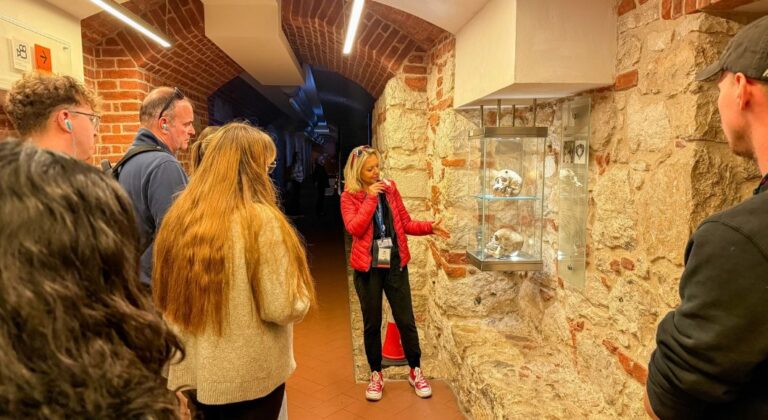
Explore the hidden history of Kraków on a 1.5-hour guided tour of the Rynek Underground Museum.…
Read More →6. The Stained Glass Workshop and Museum
On Krakowska Street in Kazimierz, a working stained glass workshop has been producing glass for Krakow’s churches since the 19th century — including for the Franciscan Church, whose extraordinary Art Nouveau windows by Stanisław Wyspiański are among the finest in Central Europe.
The workshop-museum occupies the original production space. Visitors can watch artists working on commissions using traditional lead and glass techniques — the same techniques used to make the windows that are now in the city’s great religious buildings. The museum section explains the history of the workshop and its role in the Young Poland artistic movement. It is compact, specific, and entirely free of the self-importance that larger museums bring to similar material.
Address: ul. Krakowska 19 | Hours: Check current opening times before visiting
7. Podgórze’s Quieter Side
Everyone who visits Schindler’s Factory also passes through Podgórze — the district across the river from Kazimierz where the Nazi-established Jewish Ghetto occupied several streets from 1941 to 1943. The main tourist landmarks (the factory, Ghetto Heroes Square with its Empty Chairs memorial, the remaining fragment of ghetto wall on Lwowska Street) are all covered in the standard itineraries.
What most people miss is that Podgórze extends well beyond these sites. Walk five minutes further south and you’re in a quiet residential neighbourhood with small parks, riverside paths, independent cafés, and old villas that belonged to the pre-war Jewish middle class. The Plac Wolnica (the original market square of what was once the independent town of Kazimierz-Podgórze) hosts a small market on weekday mornings. The neighbourhood has a slow, local quality that the tourist-heavy parts of Kazimierz have largely lost.
Getting there: Walk across the Bernatka footbridge from Kazimierz | Cost: Free
8. Rakowicki Cemetery
Krakow’s main cemetery, dating to 1803, is the burial site of artists, writers, musicians, military figures, and ordinary Cracovians across two centuries of the city’s history. Jan Matejko, Poland’s most celebrated historical painter, is buried here. So is the Nobel Prize-winning poet Wisława Szymborska, and the musician Marek Grechuta.
Polish cemeteries have a character different from their Western European equivalents — more visited, more tended, with a culture of regular flower-leaving and candle-lighting that gives them a quality of active commemoration rather than quiet neglect. On All Saints’ Day (November 1st) Rakowicki is transformed: thousands of candles cover the graves and paths, and the entire city seems to come to pay respects to its dead.
On any other day it is a peaceful, architecturally interesting space full of 19th and 20th century funerary sculpture. Not morbid — contemplative.
Address: ul. Rakowicka 26 | Cost: Free
9. The Wyspiański Pavilion
A short walk from Wawel Castle, the Wyspiański Pavilion is a small exhibition space dedicated to Stanisław Wyspiański, the artist, playwright, and designer who was arguably the most complete artistic talent Krakow produced. The pavilion focuses on his stained glass designs and cartoons — the working drawings for windows that ended up in the Franciscan Church and elsewhere in the city.
The pavilion is compact and rarely crowded, which makes it the best place in Krakow to understand Wyspiański’s work at close range. The designs are extraordinary: symbolic, deeply coloured, combining Catholic iconography with Slavic mythology in a visual language that is entirely his own. Five minutes here will make everything you see in the Franciscan Church more legible.
Address: ul. Szczepańska 11 | Hours: Closed Mondays | Cost: Small admission fee
10. Nowa Huta’s Central Square (and the Lenin Avenue That Still Exists)
Nowa Huta gets a mention in most guides as a curiosity — the Stalinist-era workers’ city built east of Krakow as a counterweight to the bourgeois university city. What the standard mention doesn’t convey is how genuinely strange and beautiful the place is if you give it time rather than treating it as a quick tram ride.
Plac Centralny (now officially named Ronald Reagan Central Square, which is its own layer of historical irony) is a genuine piece of monumental Socialist Realist urban planning: wide boulevards radiating from a central roundabout, consistent five-storey apartment blocks lining every approach, greenery placed with ideological precision. It looks like nowhere else in Poland and like nothing built anywhere after 1960.
Lenin Avenue (now Aleja Solidarności) runs north from the square. The street names have changed but the bones of the original city remain intact, which makes walking Nowa Huta a kind of architectural time travel. The Bar Mleczny Centralny, built into the ground floor of one of the original apartment blocks, has been serving cheap Polish food to residents since the district was constructed and is the most authentic milk bar in the city.
The experience is best done either on foot or with one of the vintage Fiat tours that several local companies offer — driving through Socialist Realism in a communist-era car has a specific quality of historical comedy that guides in normal vehicles cannot replicate.
Getting there: Tram 4 from Poczta Główna, or Tram 22 from Stradom | Cost: Free to walk; vintage car tours vary
These ten places share one quality: they give you Krakow without the crowd management that comes with the main attractions. Some are free; all are within reach of the city centre. None requires any special knowledge to appreciate, though a bit of background reading helps with Collegium Maius, Liban Quarry, and Rakowicki Cemetery. The city gets larger and more interesting the more you follow it off the obvious path.