Krakow is one of the best cities in Europe to visit alone. This is not a polite thing to say to fill space — it’s a function of the city’s specific qualities. It is compact enough to walk everywhere that matters. It is dense with history, which means there is always something to absorb, and absorbing history is an activity that works at any pace, on any schedule, alone or otherwise. It is safe, genuinely affordable by Western European standards, and has enough of an international traveler presence that solo visitors are commonplace rather than conspicuous.
The city also has a particular quality that suits solo travel: it rewards attention. The more carefully you look at Krakow — at the layers of architecture, at the competing histories written into its streets, at the complexity of what happened here in the 20th century — the more interesting it becomes. And paying close attention is easier when you’re not managing anyone else’s experience.
The Basics: Getting Around and Getting Oriented
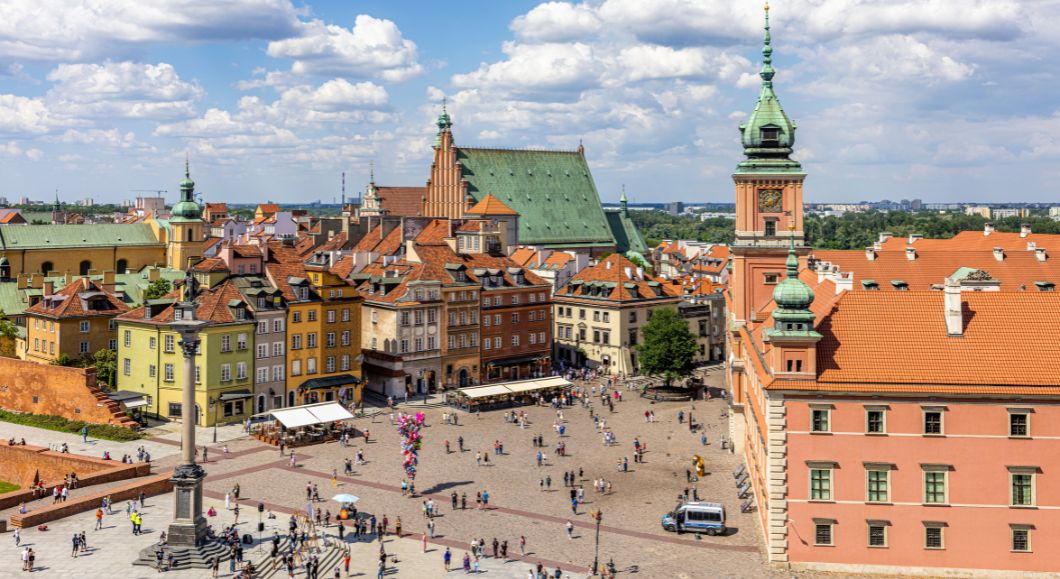
Krakow’s Old Town is encircled by the Planty — a long, tree-lined park that replaced the medieval city walls in the 19th century. Almost everything in the Old Town is within a 15-minute walk of everything else. The Market Square (Rynek Główny) is the natural centre; Wawel Hill is five minutes south; Kazimierz is ten minutes southeast; Nowa Huta is a tram ride east.
The city’s tram and bus network is efficient and cheap — a single ticket costs around 4–5 PLN, a 24-hour pass around 15 PLN. The Jakdojade app handles route planning more accurately than Google Maps for local transport. Bolt and Uber both operate in Krakow and are inexpensive for trips that don’t suit public transport. Wavelo, the city’s bike-share scheme, covers most of the centre and the Vistula riverfront paths.
The Krakow Tourist Card (available in 1, 2, and 3-day versions) gives unlimited public transport and discounted or free entry to over 30 museums. Worth calculating against your planned itinerary before buying.
Things to Do Alone in Krakow
Walk the Old Town without a plan
The best introduction to Krakow is also the simplest: leave your accommodation with no particular agenda and walk. The Old Town’s street grid is medieval — irregular, full of dead ends, alleys, and courtyard entrances that open onto unexpected spaces. The Market Square is the logical starting point, but the real pleasure is in leaving it down whichever side street looks most interesting and seeing what you find.
Solo walking in Krakow is comfortable in a way that cities of similar historical weight (Prague, Bruges, Vienna) often are not. The streets are clean, the scale is human, and the density of things worth stopping to look at is very high. Give yourself a morning with no destination and see where you end up.
Wawel Castle and Cathedral
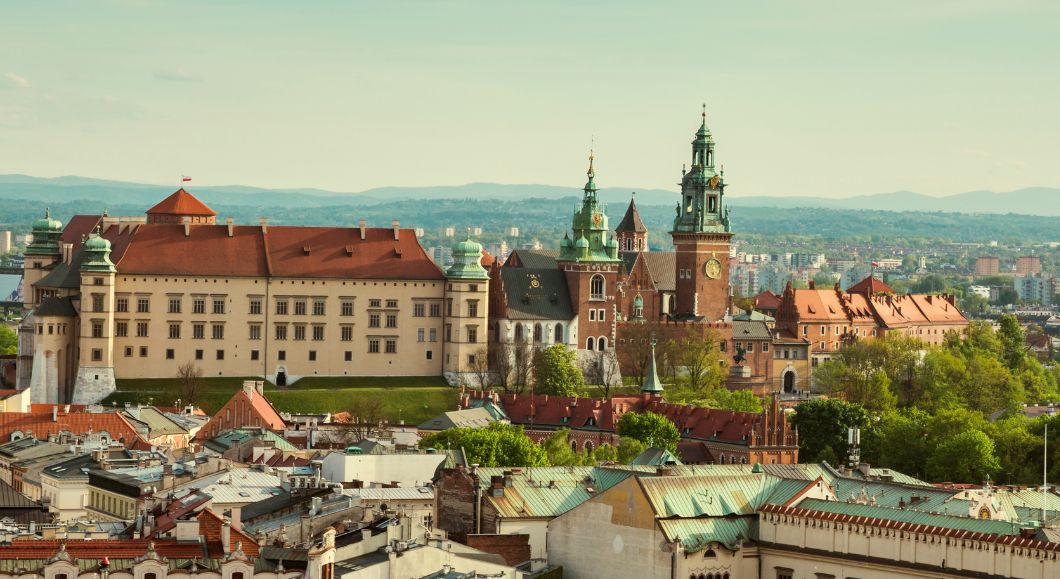
Poland’s royal seat for five centuries, Wawel Hill is not an optional stop. The castle complex sits on a limestone outcrop above the Vistula, with views across the river to the south and the Old Town to the north. The Cathedral contains the tombs of Polish kings, national heroes, and poets — including Adam Mickiewicz and Juliusz Słowacki, whose remains are here not because they died in Krakow but because Poland decided they belonged. The royal chambers in the castle are among the most significant in Central Europe.
Audio guides are available in English and work well for solo visitors. The Dragon’s Den cave at the base of the hill adds a slightly absurd but endearing mythological layer to the visit — a fire-breathing dragon is said to have lived here before Krakus, the city’s founder, defeated it by feeding it a sulphur-stuffed sheep.
Schindler’s Factory Museum
The museum at Lipowa 4, built inside the actual enamel factory where Oskar Schindler employed Jewish workers to protect them during the German occupation, is one of the finest history museums in Poland. The exhibition traces the occupation of Krakow from 1939 to 1945 through individual stories, personal objects, photographs, and reconstructed spaces.
This is a museum that works particularly well for solo visitors. The experience is inherently personal and reflective; the pacing benefits from being entirely your own. Allow 2–3 hours minimum. Book tickets online in advance — they sell out regularly, especially in summer.
The Rynek Underground Museum
Beneath the Market Square, archaeologists excavated the medieval foundations of the city in the early 2000s. The museum that resulted — reached through a lift in the middle of the square — uses interactive displays, projections, and preserved remains to tell the story of Krakow’s medieval trading culture. The space is genuinely unusual: you are walking through what was, in the 12th and 13th centuries, the commercial heart of a prosperous city.
Less emotionally demanding than Schindler’s Factory but equally well-designed; a good option for the afternoon when your head needs a rest from heavier history.
Kazimierz on foot
The Jewish Quarter — ten minutes’ walk from the Market Square — deserves several hours of slow wandering. The architecture is different from the Old Town (denser, more worn, with the specific character of a neighbourhood that was wealthy, then impoverished, then destroyed, then neglected, then rediscovered), the streets are narrower, and the bars and cafés are more varied and more local in character.
For solo visitors, Kazimierz is particularly good because it is a neighbourhood you explore rather than visit — there are no singular must-see attractions demanding your attention in sequence, just streets and squares and buildings and synagogues and cafés to encounter at whatever pace suits you. Plac Nowy, the market square in the middle of the district, is the natural place to orientate from.
A free walking tour
Krakow has several free walking tour operators who run tip-based tours in English from the Market Square. The tours cover different themes — Old Town history, Kazimierz and the Jewish Quarter, communist Krakow — and take 2–3 hours each. For solo travelers arriving in a new city, a good walking tour serves two purposes simultaneously: it provides historical context and it provides the company of other travelers without requiring any social commitment. You arrive alone, you walk with a group, you tip the guide at the end, and you leave having learned something and perhaps met someone.
Look for the guides with the distinctive coloured umbrellas near the Cloth Hall at the Market Square — tours typically depart multiple times per day.
Nowa Huta: Soviet Krakow
Krakow’s communist-era satellite city, built from the 1950s, is a tram ride east of the centre and one of the more unusual urban experiences in Poland. The district was designed as a workers’ paradise and built in Socialist Realist style: wide boulevards, monumental architecture, green spaces placed with ideological precision. Walking Nowa Huta is free; the architecture and the contrast with the medieval city centre are the entire point. Allow half a day.
Harris Piano Jazz Bar
Beneath the Market Square on Rynek Główny 28, Harris is the best jazz bar in Krakow and a reliable evening option for solo visitors. Live music most evenings from around 9 or 10 PM; the venue is small and candlelit, the atmosphere relaxed, and the quality of the jazz consistently high. Sitting alone at a jazz bar is, in the estimation of most people who have done it, one of the finer things available to a solo traveler in any city.
Day trips by yourself
Krakow’s surrounding attractions are well-suited to solo visitors because they are generally managed as organised experiences that work regardless of whether you come alone or in a group. The Wieliczka Salt Mine is 30 minutes away and runs guided tours continuously in multiple languages. Auschwitz-Birkenau, an hour west, requires a timed entry reservation and benefits from a guided tour, both of which you book individually. Zakopane and the Tatra Mountains, two hours south by bus, are an entirely self-directed experience once you arrive.
On Eating Alone
Solo dining in Krakow is entirely comfortable. The city’s cafés and milk bars are designed for quick individual meals, and the range of solo-friendly options is wide. A few specific thoughts:
The city’s milk bars — particularly Bar Mleczny Miś, Bar Mleczny Centralny in Nowa Huta, and Bar Mleczny Pod Temida in the Old Town — are the most natural solo-dining environments in Krakow. You queue, you order, you sit, you eat. The solo traveler at a milk bar is not a curiosity; it is the default.
Kazimierz cafés are good for longer, slower meals: coffee, a book, the neighbourhood passing outside. Singer, Mleczarnia, and Eszeweria are all comfortable for a solo hour or two.
The Market Square itself is ringed with café terraces that are expensive relative to the rest of the city but genuinely pleasant for sitting alone with a drink and watching the square in its various states across the day.
Safety
Krakow is consistently rated among the safest cities in Poland for solo travelers. Poland ranks highly on European safety indices. The standard precautions apply — keep track of your belongings in crowded tourist areas, use Bolt or Uber rather than hailing taxis on the street at night, stick to lit areas after midnight — but nothing in Krakow requires unusual vigilance.
The stag and hen party culture in the Old Town occasionally produces groups of varying cohesion and noise level, particularly on weekend evenings. This is essentially a social inconvenience rather than a safety issue, and moving a street or two away from the main party strips resolves it immediately.
A Note on Pace
The most common mistake solo travelers make in Krakow is trying to see everything. The city has enough serious content — Wawel, Schindler’s Factory, Auschwitz, the Jewish history of Kazimierz — that trying to compress it into two or three days produces a kind of cognitive and emotional overload. The history here is heavy, and heavy history needs time to settle.
Three to four days is the right duration for a solo visit that takes the city seriously. One day for the Old Town and Wawel. One day for Kazimierz and Schindler’s Factory. One day for a day trip (Wieliczka, Auschwitz, or Zakopane — not all three). One day for slower exploration: Nowa Huta, a jazz bar, a bookshop, a long lunch somewhere. That leaves you with a city you’ve actually experienced rather than a list of places you’ve photographed.